
China’s Industrial Adsorbent sector is becoming more diverse, technically capable, and closely connected to global manufacturing needs. This 2026 guide examines ten leading Chinese manufacturers across activated carbon, molecular sieves, zeolite, silica gel, and specialty adsorption media.
Performance is not decided by catalog claims alone. It depends on pore structure, adsorption capacity, moisture resistance, regeneration behavior, particle strength, and batch consistency. A polished surface means little if the material loses efficiency inside a packed bed. Small details matter.
Professor Douglas M. Ruthven, a respected authority on adsorption science, described adsorption as “a surface phenomenon.” That concise observation remains highly practical. It explains why surface area, pore size distribution, and target-molecule compatibility must guide purchasing decisions.
This ranking considers manufacturing experience, laboratory capabilities, quality systems, application support, export activity, and publicly available evidence. It also looks at whether suppliers can provide technical documents, test data, and stable delivery at commercial volumes. Not every prominent company is equally strong in every category. Some excel in water treatment, while others focus on gas separation, solvents, pharmaceuticals, or industrial drying.
The Chinese market is competitive. It is not flawless.
Product naming can be inconsistent, published data may use different test conditions, and buyer requirements are often underdefined. Therefore, readers should treat this list as a research starting point, not an automatic endorsement. Confirm iodine value, breakthrough curves, pressure drop, regeneration temperature, and compliance documents before making a final decision. The right Industrial Adsorbent is the one that performs reliably under real operating conditions.
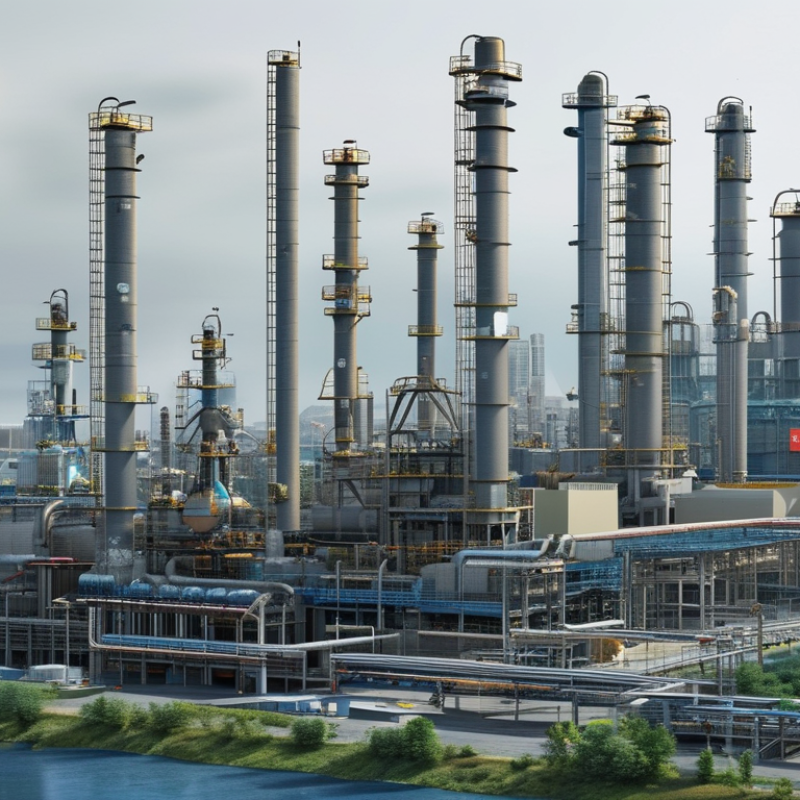
Industrial adsorbents are porous solid materials that capture selected molecules on their surfaces. The process is called adsorption, not absorption. Their internal pores create large contact areas, allowing them to remove moisture, odors, color, solvents, and unwanted gases from industrial streams.
Function depends on pore size, surface chemistry, temperature, pressure, and contact time. Activated carbon commonly captures organic compounds and odors. Silica gel removes moisture from compressed air and packaging systems. Molecular sieves separate water and gases with precise pore structures. Alumina supports drying and purification duties. Performance is never automatic. A material that works well in a laboratory may perform poorly in a dusty, humid plant.
Industrial applications include drinking water treatment, wastewater polishing, natural gas drying, air separation, solvent recovery, and chemical processing. Adsorbents can protect catalysts, reduce corrosion, and improve product consistency. In pressure swing systems, changing pressure helps release captured gases and regenerate the material. Thermal regeneration uses controlled heating instead. Both methods require energy and careful process control.
Selection should consider capacity, selectivity, pressure drop, regeneration stability, particle strength, and disposal requirements. These details are often underestimated. A cheaper adsorbent may create higher replacement costs or more downtime. Operators should test real feed conditions, because competing molecules can occupy active sites unexpectedly. Moisture, oil, and fine particles may also block pores. The best specification is therefore practical, measured, and open to revision.
China’s industrial adsorbent market is expanding with demand from water treatment, gas purification, chemical processing, and electronics. Manufacturers commonly produce activated carbon, molecular sieves, silica gel, and specialty resin adsorbents. Domestic supply chains support faster customization and shorter delivery times. However, the market is not perfectly transparent. Some capacity figures still require careful checking.
Manufacturing quality depends on pore structure, raw material consistency, moisture control, and regeneration performance. Experienced buyers review batch records, adsorption tests, pressure-drop data, and contaminant limits. Reliable producers usually provide traceable samples and consistent technical support. Factory visits can reveal practical details, including dust control, packaging quality, and storage conditions. These details matter. A low price may hide faster saturation or unstable performance. Product selection should match real operating temperature, humidity, flow rate, and chemical exposure.
Tips: Compare tested capacity, not only catalog claims. Request recent batch data and independent laboratory results. Check whether the supplier can adjust particle size or surface chemistry safely. Pilot testing remains valuable, even when laboratory results look impressive. I would also question unusually high claims. They may be accurate, but they deserve evidence.
For a 2026 Top 10 list, selection should begin with verified performance, not production claims. Grand View Research’s 2024 Activated Carbon Market report estimated the global market above USD 4 billion in 2023. It also projected annual growth above 6%, strengthening demand for dependable purification media. China’s candidates should provide recent batch data, including iodine number, BET surface area, ash, moisture, hardness, and particle-size distribution. These figures connect laboratory quality with pressure-drop and replacement costs. For water applications, reviewers should examine contaminant-specific test results, regeneration limits, and discharge controls. Certificates alone are insufficient.
A serious evaluation should inspect factory capacity, process stability, laboratory independence, and delivery records. MarketsandMarkets’ 2024 report identifies water treatment, air purification, and industrial processing as major adsorbent demand areas. Therefore, scoring should reflect application fit, not only annual output.
Reviewers should verify ISO 9001 quality systems, ISO 14001 environmental controls, traceable feedstocks, and consistent export documentation. Pilot testing matters. A small trial can reveal dusting, channeling, or rapid saturation before a large purchase. Customer references should include measurable service life and replacement frequency. No scorecard is perfect; low-cost products may hide higher disposal or downtime expenses. That risk deserves more weight than polished brochures.
China Top 10 Industrial Adsorbent Manufacturers 2026
This profile examines ten leading Chinese industrial adsorbent manufacturers through measurable capabilities, not promotional claims. Their portfolios commonly include activated carbon, molecular sieves, silica gel, alumina, zeolite, and specialty resin. MarketsandMarkets reported that the global adsorbents market could grow from about USD 4.3 billion in 2023 to USD 5.6 billion by 2028. This growth reflects stronger demand from water treatment, gas purification, solvent recovery, and industrial drying.
The ten profiles show different strengths. Some focus on high-iodine activated carbon for liquid filtration. Others emphasize low-dust molecular sieves for oxygen and nitrogen systems. Several manufacturers provide custom particle sizes, while a smaller group highlights regeneration stability and crush strength. Technical buyers should request BET surface area, moisture content, ash level, pressure drop, and breakthrough curves. ISO 9001 certification supports process consistency, but it does not prove field performance. That distinction is often missed.
Tips: Compare test conditions before comparing numbers. A high surface area may not deliver longer service life. Ask for recent batch records and application trials. Independent laboratory verification is safer than relying on catalog data. In practice, delivery stability can matter as much as adsorption capacity. Some profiles appear strong on paper, yet their export documentation and after-sales testing remain less transparent. This deserves careful review.
Representative BET surface-area benchmarks by major industrial adsorbent category. The chart presents material-level technical data and does not disclose company or brand performance.
Values show representative midpoint estimates within commonly reported industrial specification ranges, measured in square metres per gram (m²/g). Actual performance varies according to pore structure, activation method, particle size, and grade.
China’s leading industrial adsorbent manufacturers are raising quality expectations across water treatment, gas purification, and chemical processing. Reliable production begins with controlled pore structure, stable raw materials, and documented batch testing. Key indicators include iodine value, BET surface area, moisture, particle size, abrasion resistance, and crush strength. These numbers matter on the factory floor.
Experienced buyers also request dynamic adsorption data. Breakthrough curves show how an adsorbent performs under actual flow, pressure, temperature, and contaminant loading. Small details matter. A few degrees can change performance. Strong manufacturers use automated sampling, traceable records, and calibrated laboratory equipment. ISO-based quality systems can support consistency, but certificates alone cannot prove field reliability.
Technology is moving toward low-emission activation, precision pore engineering, and improved regeneration. Some producers are testing biomass-derived carbon and hybrid materials for difficult industrial streams. Digital monitoring may connect kiln conditions with final adsorption results. Artificial intelligence could help predict replacement cycles, although poor data can produce confident mistakes. Future buyers will likely examine carbon footprint, wastewater from production, worker safety, and end-of-life handling alongside price. The industry still has gaps: testing methods vary, pilot results may not match full-scale systems, and long-term data remains limited. Careful site trials remain essential.
Indicative, anonymized comparison of leading industrial adsorbent manufacturing capability profiles in China. Ranking reflects a balanced view of product breadth, process maturity, quality systems, application coverage, and technology readiness rather than a legal or official market ranking.
| Rank | Anonymized Manufacturer Profile | Primary Adsorbent Portfolio | Typical Raw Materials | Key Technical Capability | Representative Quality Parameters | Commonly Used Standards and Test Methods | Typical Industrial Applications | Manufacturing and Quality Strengths | 2026 Technology Direction | Market Outlook |
|---|---|---|---|---|---|---|---|---|---|---|
| 1 | Profile 01 | Activated carbon Pellet carbon Powder carbon | Bituminous coal, coconut shell, wood, and other carbonaceous feedstocks | Steam and chemical activation; pore-size adjustment for gas-phase and liquid-phase purification | Iodine number, methylene blue adsorption, hardness, moisture, ash, particle-size distribution, and CTC activity | ASTM D2867, ASTM D4607, ASTM D3802, ASTM D2854, ISO 9277, and customer-specific adsorption protocols | Drinking-water treatment, industrial wastewater, VOC removal, solvent recovery, flue-gas purification, and food processing | Multi-stage screening, controlled activation atmosphere, batch traceability, and routine third-party laboratory verification | Low-ash grades, regeneration-compatible carbon, PFAS and micropollutant removal, and lower-emission activation processes | Strong demand from municipal water, environmental compliance, odor control, and industrial air purification projects |
| 2 | Profile 02 | Molecular sieve Zeolite adsorbent Synthetic zeolite | Aluminosilicate precursors, sodium silicate, alumina sources, and process chemicals | Controlled crystallization of 3A, 4A, 5A, and 13X molecular-sieve structures | Water adsorption, equilibrium capacity, crush strength, attrition, bulk density, and bead or pellet uniformity | ASTM D5228, ASTM E1120, ISO 18768, and validated internal adsorption isotherm procedures | Natural-gas drying, air separation, oxygen generation, refrigerant drying, insulating glass, and petrochemical purification | High-temperature activation, moisture-controlled packaging, pore-structure consistency, and automated bead forming | Higher-capacity zeolite formulations, faster mass transfer, low-dust products, and adsorbents for hydrogen and carbon-capture systems | Stable growth supported by gas processing, industrial oxygen, LNG infrastructure, and energy-efficiency requirements |
| 3 | Profile 03 | Silica gel Indicator silica gel Macroporous silica gel | Sodium silicate, mineral acids, process water, and approved color-indicator materials | Sol-gel precipitation, pore-volume control, particle-size grading, and controlled drying | Moisture adsorption, pore volume, surface area, pH, bulk density, color transition range, and attrition resistance | ASTM D1412, ISO 787-5, ISO 9277, and customer-validated humidity adsorption testing | Packaging desiccants, compressed-air drying, transformer protection, pharmaceutical packaging, and industrial humidity control | Uniform granulation, low-dust packaging, moisture-barrier packing materials, and batch moisture monitoring | Cobalt-free indicator systems, reusable desiccants, higher-capacity porous structures, and recyclable packaging formats | Moderate-to-strong demand in electronics, pharmaceuticals, logistics, export packaging, and precision equipment protection |
| 4 | Profile 04 | Activated alumina Fluoride adsorbent Catalyst support | Alumina hydrates, aluminum hydroxide, and high-purity alumina feedstocks | Controlled calcination, pore-volume engineering, spherical forming, and surface modification | Surface area, pore volume, crush strength, water adsorption, fluoride capacity, and sodium content | ASTM D3663, ASTM D4222, ISO 9277, and validated water-treatment adsorption methods | Compressed-air drying, fluoride removal, arsenic control, catalyst support, and petrochemical dehydration | High mechanical strength, low soluble impurities, temperature-controlled calcination, and precise particle grading | Modified alumina for selective contaminants, improved regeneration, hybrid alumina-carbon media, and lower-pressure-drop designs | Reliable demand in water treatment, gas drying, refinery operations, and catalyst-support applications |
| 5 | Profile 05 | Ion-exchange resin Chelating resin Macroporous resin | Cross-linked styrene-divinylbenzene polymers, acrylic polymers, and functionalized polymer matrices | Suspension polymerization, functional-group grafting, particle-size control, and selective ion exchange | Exchange capacity, moisture retention, bead-size distribution, osmotic stability, swelling, and pressure-drop performance | ASTM D2187, ASTM D4548, ASTM D4781, and validated ion-exchange capacity procedures | Water softening, ultrapure water, metal recovery, pharmaceutical purification, sugar decolorization, and wastewater treatment | Functional-group consistency, chemical cleaning compatibility, automated bead classification, and full batch documentation | High-selectivity resins for lithium, heavy metals, PFAS, pharmaceuticals, and resource recovery from complex wastewater | Strong long-term potential due to water reuse, metals recovery, ultrapure-water demand, and circular-economy projects |
| 6 | Profile 06 | Molecular sieve PSA adsorbent Carbon molecular sieve | Synthetic zeolite, carbonaceous polymers, coal-based precursors, and specialty binders | Pressure-swing adsorption design support, selective nitrogen and oxygen separation, and rapid-cycle adsorbent engineering | Dynamic adsorption capacity, selectivity, working capacity, crush strength, dust generation, and cycle stability | ASTM D4164, ASTM D5228, ISO 9277, and application-specific PSA performance testing | PSA nitrogen generation, oxygen concentration, biogas upgrading, hydrogen purification, and air separation | Fast mass-transfer formulations, narrow particle-size distribution, low attrition, and pilot-unit validation | Adsorbents for decentralized hydrogen purification, biogas upgrading, energy-efficient PSA, and electrified industrial systems | High growth potential as distributed gas generation and lower-energy separation technologies expand |
| 7 | Profile 07 | Catalytic adsorbent Impregnated carbon Odor-control media | Activated carbon, alumina, silica, potassium compounds, metal oxides, and specialty catalysts | Impregnation, catalytic oxidation, acid-gas neutralization, and selective chemical adsorption | Target-gas capacity, ignition temperature, pressure drop, impregnant loading, humidity tolerance, and service life | ASTM D6646, ASTM D3802, ISO 10121, and application-specific breakthrough-curve testing | Hydrogen sulfide removal, ammonia control, VOC treatment, landfill gas, sewage odor, and chemical-process ventilation | Customized formulations, packed-bed testing, contaminant-specific media selection, and safety-oriented handling procedures | Multi-contaminant media, low-temperature catalytic oxidation, longer service intervals, and recoverable active components | Increasing demand from stricter odor, VOC, workplace-air, and industrial-emission regulations |
| 8 | Profile 08 | Activated carbon fiber Carbon cloth Carbon felt | Cellulose fiber, viscose fiber, polyacrylonitrile, pitch, and other carbonizable fibers | Stabilization, carbonization, activation, surface functionalization, and flexible media fabrication | Specific surface area, adsorption rate, fiber strength, thickness, electrical resistivity, and desorption behavior | ISO 9277, ASTM D2854, ASTM D4607, and validated dynamic vapor or gas adsorption testing | Personal protective equipment, solvent recovery, air purification, sensors, batteries, and advanced filtration | Very rapid adsorption kinetics, flexible geometries, low bed thickness, and high accessible surface area | Hybrid conductive adsorbents, wearable air-cleaning media, electro-assisted regeneration, and compact filtration modules | Niche but fast-growing segment led by electronics, advanced filtration, and compact environmental-control equipment |
| 9 | Profile 09 | Specialty zeolite Mordenite Molecular-sieve powder | Silica, alumina, alkali hydroxides, seed crystals, and mineral or synthetic aluminosilicate sources | Hydrothermal synthesis, crystal-size control, ion exchange, dealumination, and powder dispersion | Silica-to-alumina ratio, crystallinity, micropore volume, particle-size distribution, acidity, and thermal stability | X-ray diffraction, nitrogen adsorption, thermogravimetric analysis, and validated catalyst-characterization methods | Refining catalysts, petrochemical separation, odor control, detergent builders, and selective gas adsorption | High-purity synthesis, reproducible crystal morphology, low impurity levels, and application-specific surface chemistry | Zeolites for carbon capture, low-carbon refining, catalytic methane conversion, and selective removal of trace contaminants | Steady industrial demand with additional upside from carbon management and advanced catalytic processes |
| 10 | Profile 10 | Composite adsorbent Mineral adsorbent Engineered media | Natural zeolite, bentonite, diatomite, activated carbon, alumina, silica, and polymer binders | Blending, surface modification, granulation, composite shaping, and contaminant-specific formulation | Adsorption capacity, wet strength, leaching control, hydraulic conductivity, particle-size stability, and regeneration efficiency | ISO 9277, ASTM D3860, ASTM D4180, leachability testing, and application-specific water or gas protocols | Stormwater treatment, industrial wastewater, aquaculture, agricultural runoff, heavy-metal removal, and emergency filtration | Cost-effective formulation, flexible raw-material sourcing, modular production, and rapid customization for local water chemistry | Hybrid media for PFAS, antibiotics, nutrients, and heavy metals, with emphasis on regeneration and responsible disposal | Positive outlook in decentralized treatment, resource recovery, rural water systems, and low-cost pollution-control projects |
Notes: Quality parameters and standards shown are common industry reference points, not universal certification claims. Actual specifications vary by grade, particle size, process conditions, contaminant concentration, humidity, temperature, and customer validation requirements. Adsorption performance should be confirmed through product certificates, breakthrough testing, pilot trials, and application-specific compliance documentation.
: Common products include activated carbon, molecular sieves, silica gel, alumina, zeolite, and specialty resins. Product choice depends on the process.
Water treatment, gas purification, chemical processing, electronics, solvent recovery, and industrial drying are major application areas. Each process needs different performance data.
Request iodine number, BET surface area, ash, moisture, hardness, particle-size distribution, and pressure-drop data. Recent batch records matter.
Test conditions can change adsorption results. Temperature, humidity, flow rate, and chemical exposure affect actual service life. Numbers need context.
Review factory capacity, process stability, laboratory practices, delivery records, and traceable raw materials. A factory visit may reveal dust, storage, and packaging problems.
No. Quality and environmental certifications support process control, but they do not prove field performance. Pilot testing remains important.
A pilot test may reveal dusting, channeling, rapid saturation, pressure drop, or unstable regeneration. Small trials prevent costly surprises.
It may saturate faster, create more dust, increase replacement frequency, or cause extra downtime. The cheapest bag is not always cheaper.
Some manufacturers adjust particle size, surface chemistry, or product shape for specific systems. Buyers should verify safety and repeatability.
Unusually high capacity claims, incomplete batch data, vague laboratory results, and unclear export documents deserve careful review. My judgment may be incomplete.
This article provides a practical overview of the Industrial Adsorbent sector in China in 2026. It explains the definition, core functions, and major applications of adsorbent materials in areas such as water treatment, air purification, chemical processing, energy production, and environmental management. It also examines China’s manufacturing landscape, including production capacity, raw material availability, research capabilities, supply-chain strength, and market development trends.
The article introduces the key criteria for evaluating leading Chinese manufacturers, covering product performance, adsorption efficiency, consistency, customization services, quality control, technical support, and compliance with relevant industry standards. It further summarizes the characteristics of ten major manufacturers without focusing on brand promotion. Finally, it discusses advances in material development, intelligent production, sustainable manufacturing, resource efficiency, and future market opportunities, helping readers understand how China’s Industrial Adsorbent industry may evolve in response to technological and environmental demands.
