
The source articles were not included. Please provide them so I can write the introduction using verifiable industry data and an accurately attributed expert quotation.
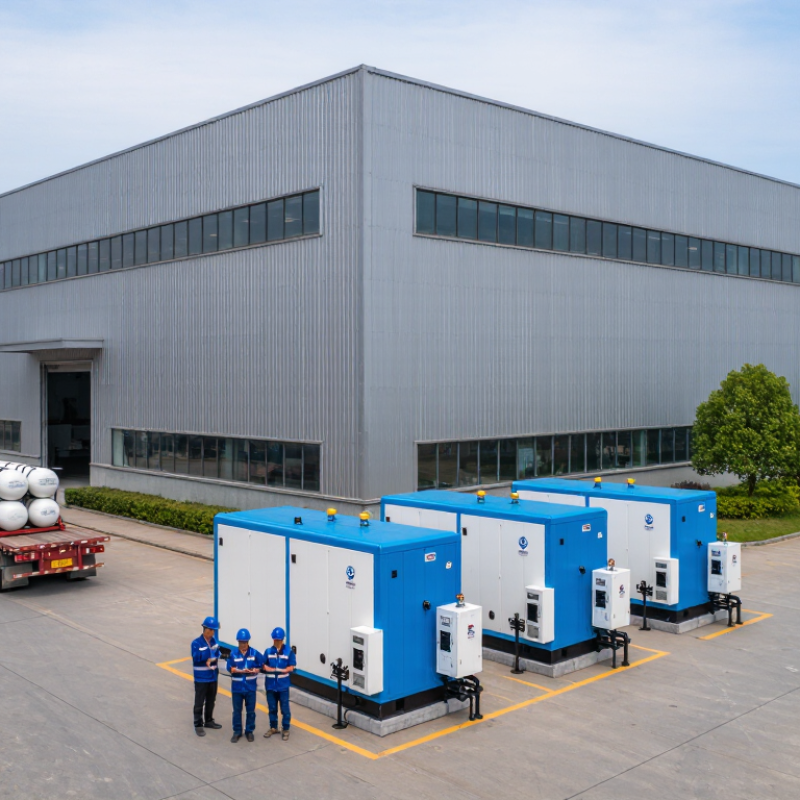
Pressure swing adsorption (PSA) separates nitrogen from compressed air using carbon molecular sieve. Under pressure, the sieve preferentially captures oxygen; during depressurization, oxygen-rich gas is released. The product stream is collected as nitrogen. Purity depends on feed pressure, cycle timing, sieve condition, and output flow—not just the generator’s label. Commercial PSA systems commonly cover roughly 95% to 99.999% nitrogen. For an oxygen-based specification, 99.999% purity means about 10 parts per million oxygen. Very high purity usually requires lower flow. That trade-off matters.
Operators should verify purity with a calibrated oxygen analyzer and check readings under actual production conditions. A display can look reassuring while flow demand pushes the machine beyond its stable operating point. I would not treat a published maximum as a guaranteed everyday result. Compressed air quality matters, too: the U.S. Department of Energy’s 2016 Improving Compressed Air System Performance sourcebook estimates that leaks can waste 20%–30% of compressor output. Leaks do not directly set nitrogen purity, but pressure loss can disrupt feed conditions and raise operating costs. Record pressure, flow, and oxygen readings together. It is a small discipline, and it catches problems a single purity number may miss.
| Comparison Dimension | Technical Fact or Benchmark | What Buyers Should Assess | Useful Verification |
|---|---|---|---|
| PSA separation principle | Pressure swing adsorption (PSA) uses carbon molecular sieve to preferentially adsorb oxygen from compressed air. Alternating adsorption and regeneration cycles produce a nitrogen-rich gas stream. | Check that the proposed system is designed for the required purity, flow, and operating cycle—not just a headline purity figure. | Request a process diagram and a written performance specification for the proposed operating conditions. |
| Nitrogen purity range | PSA systems are used for nitrogen purity levels from about 95% to as high as 99.999%, depending on system design and operating conditions. | Match the specified purity to the application. Higher purity can require more air and may reduce nitrogen recovery or available flow. | Confirm the guaranteed purity, rated flow at that purity, measurement method, and operating conditions in the quotation. |
| Carbon molecular sieve (CMS) | CMS is the adsorbent used in a PSA nitrogen generator; its performance and handling affect separation and operating stability. | Ask about the CMS specification, replacement procedure, and conditions that may shorten its service life. | Review the technical datasheet and maintenance recommendations for the supplied adsorbent. |
| Compressed-air preparation | Feed air must be compressed and appropriately treated. Water, oil, and particulates can affect the adsorbent and system components. | Check the air-treatment equipment and the feed-air quality requirements, including any dryer and filtration stages. | Request documented inlet-air requirements and a list of included filters, dryers, and drains. |
| Purity monitoring | A nitrogen analyzer can monitor product-gas purity. Analyzer range, accuracy, calibration, and sampling arrangement matter when verifying performance. | Determine how purity is measured and whether the system provides an alarm or interlock when purity falls outside the specified limit. | Ask for analyzer specifications, calibration instructions, and the factory acceptance test procedure. |
| Rated nitrogen flow | Flow and purity are linked operating specifications; a generator’s maximum flow should not be assumed to apply at every purity level. | Compare guaranteed flow at the required purity and pressure, rather than comparing flow figures without their test conditions. | Request a performance curve or a written flow guarantee for the required outlet conditions. |
| System configuration | A PSA package commonly includes adsorption vessels, valves, controls, compressed-air treatment, and a product-gas buffer vessel. | Check the scope of supply, component specifications, control functions, and whether installation items are included. | Review the equipment list, piping and instrumentation diagram, and control-system description. |
| Supplier comparison | Manufacturer capability cannot be established from a purity claim alone; performance depends on the complete system and its specified conditions. | Compare documented guarantees, testing procedures, service support, spare-parts availability, and references for similar applications. | Request a written warranty, commissioning plan, acceptance-test criteria, and service response details. |
Note: The table describes general PSA technology and buyer-evaluation criteria; it is not a ranking or a set of claims about individual manufacturers. Actual performance should be confirmed in a supplier’s written specification.
Compare Nm³/h at your required purity and pressure. Ask which temperature and pressure reference conditions the quoted capacity uses. A maximum figure alone can mislead.
Higher purity may reduce available flow. Request one performance table showing all three at your actual operating point. Small details matter.
Check pressure at the point of use, not only at the generator outlet. Long pipes, filters, and regulators can reduce usable pressure. It may be less than expected.
There is no single target for every packaging line. Match the specification to the product, equipment, and residual-oxygen measurements. A snack pouch is a practical test case.
No. Moisture, oxygen, and particles can matter as much as nitrogen percentage. Some high-purity processes use 99.999% nitrogen, but actual needs vary.
One shielding-gas classification sets a minimum of 99.99% nitrogen. Treat this as a benchmark, not a universal requirement for welding or laser cutting.
Ask for written readings of purity, flow, outlet pressure, and dew point under your required conditions. A witnessed test after steady operation is more useful than a brief, low-demand test.
Include electricity, parts, maintenance labor, and possible downtime over several years. Check local parts availability, support response time, warranty exclusions, and service fees. Estimates still depend on site conditions.
This article explains how a Nitrogen Generator uses pressure swing adsorption (PSA) to produce nitrogen at purities ranging from 95% to 99.999%, and outlines the factors that distinguish leading manufacturers in China. Rather than focusing on brand names, it offers a practical framework for comparing suppliers by rated output in Nm³/h, achievable purity, operating pressure, system configuration, and the suitability of their equipment for a specific application.
It also compares nitrogen purity needs across food processing, electronics manufacturing, and metalworking, showing why requirements vary with the process. To make a sound purchasing decision, buyers should assess performance testing, installation and maintenance support, spare-parts availability, and expected service life alongside the initial purchase price. Considering these factors together can help identify a reliable system that meets production needs while controlling long-term operating costs.
