1 / 1

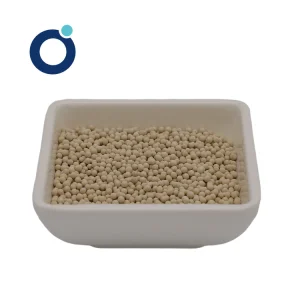
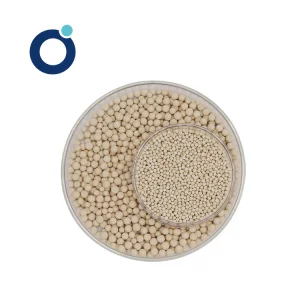
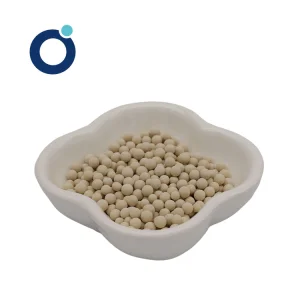
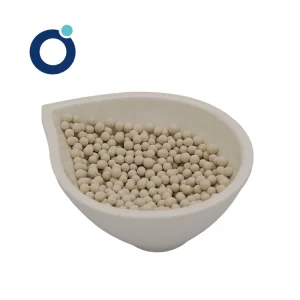
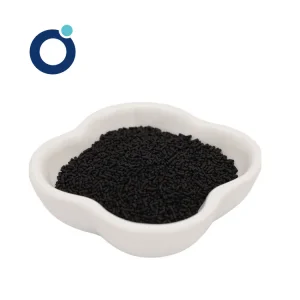
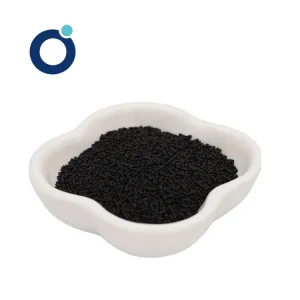
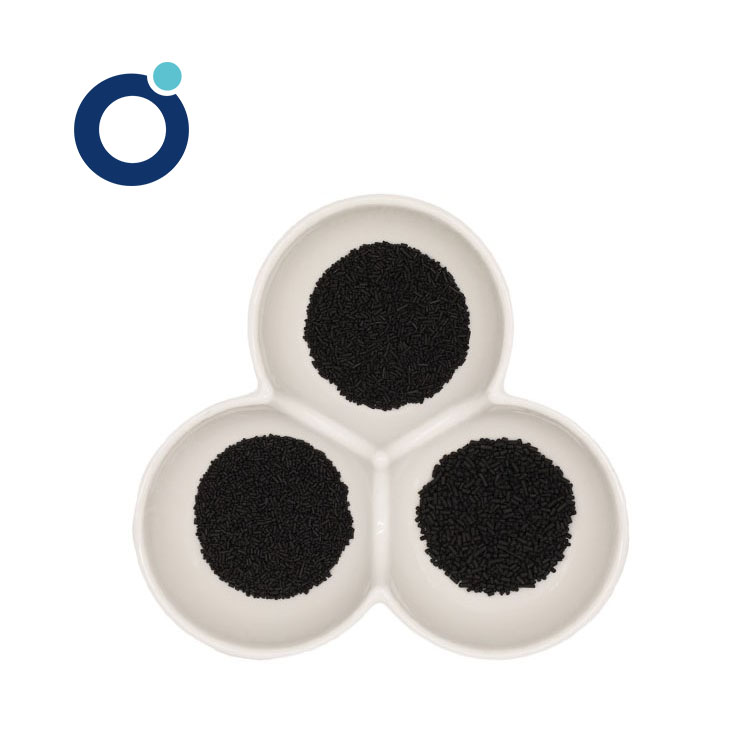
JZ-CMS4N is a new kind of non-polar adsorbent, designed for the enrichment of nitrogen from air, and has a high adsorption capacity from oxygen. With its characteristic of high efficiency, low air consumption and high purity nitrogen capacity. High ratio performance & price, reducing investment cost and operation cost.
One ton CMS4N can get 240 m³ of Nitrogen with purity 99.5% per hour under same working condition.
| Type | Purity (%) | Productivity (Nm³/h.t) | Air / N₂ |
|---|---|---|---|
| JZ-CMS3PN | 99.5 | 330 | 2.8 |
| 99.9 | 250 | 3.3 | |
| 99.99 | 165 | 4.0 | |
| 99.999 | 95 | 6.4 | |
| Testing size | Testing Temperature | Adsorption Pressure | Adsorption Time |
| 1.0 | 20℃ | 0.8Mpa | 2*60s |
Used to separate N₂ and O₂ in the air in the PSA system. PSA technology separates nitrogen and oxygen by the van der Waals force of carbon molecular sieve, therefore, the larger the surface area, the more uniform the pore distribution, and the more the number of pores or subpores, the adsorption capacity is bigger.
The product as desiccant cannot be exposed in the open air and should be stored in dry condition with air-proof package.
Standard packaging: 20kg ; 40kg ; 137kg / plastic drum.
| Type | Unit | Data |
|---|---|---|
| Diameter size | mm | 1.0, 1.2 |
| Bulk Density | g/L | 650-690 |
| Crush Strength | N/Piece | ≥35 |
JZ-CMS4N is a non-polar carbon molecular sieve adsorbent designed to enrich nitrogen from air. It functions through PSA (Pressure Swing Adsorption) technology, utilizing the van der Waals force of the molecular sieve to separate nitrogen and oxygen.
Under standard testing conditions, one ton of CMS4N can generate up to 240 m³ of Nitrogen per hour at a purity level of 99.5%.
As a desiccant, it must be stored in dry conditions within air-proof packaging. It should not be exposed to the open air prior to use to prevent premature moisture adsorption.
The product is supplied in three standard plastic drum configurations: 20kg, 40kg, and 137kg.
It features a particle diameter size of 1.0 to 1.2 mm, a bulk density ranging between 650-690 g/L, and a crush strength rating of ≥35 N/Piece.