Selecting the optimal desiccant requires a comprehensive understanding of raw chemical properties, thermodynamic limits, and regeneration kinetics.
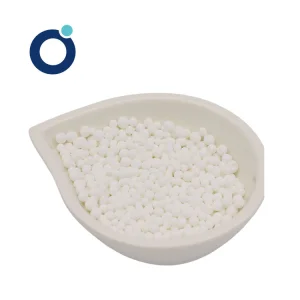
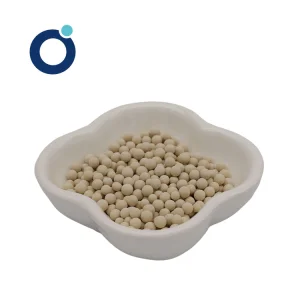
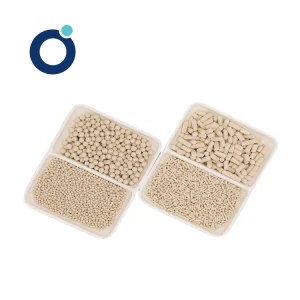
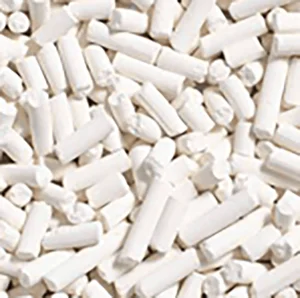
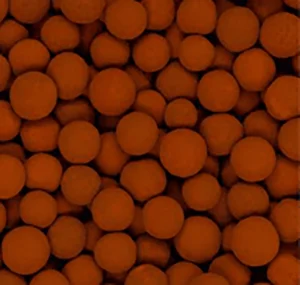
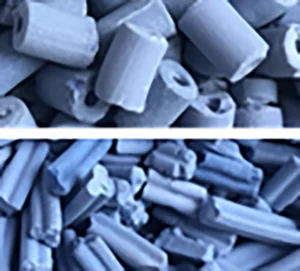
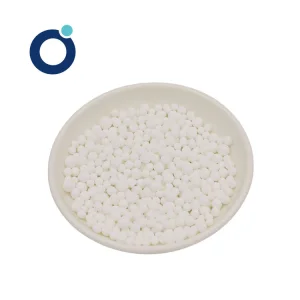
Manufactured by the dehydroxylation of aluminum hydroxide under controlled high temperatures, Activated Alumina ($\gamma-\text{Al}_2\text{O}_3$) is a highly porous transitional phase aluminum oxide. Boasting a high surface-area-to-weight ratio exceeding $300\text{ m}^2/\text{g}$, it features an abundance of catalytic active sites and high mechanical stability. It is especially suitable for gas and liquid phase drying applications requiring extreme durability.
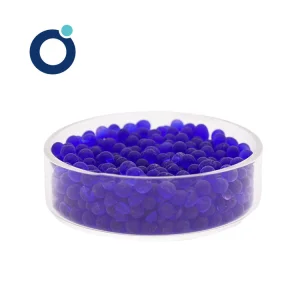
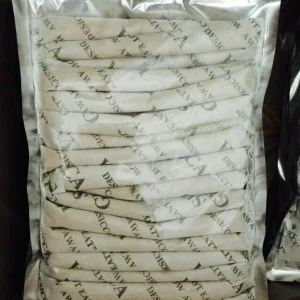
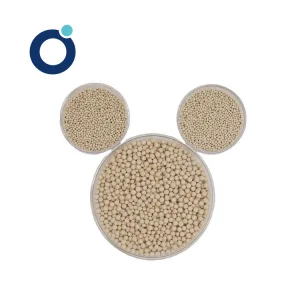
Silica Gel is an amorphous form of silicon dioxide ($\text{SiO}_2$) with a highly cross-linked, polymeric structure. Prepared through the reaction of sodium silicate and mineral acids, it yields a rigid, highly interconnected pore network. Standard silica gel boasts a surface area of up to $800\text{ m}^2/\text{g}$, providing exceptional moisture absorption capacities at lower relative humidities and ambient temperatures.
While silica gel excels in static applications and HVAC setups where low-temperature regeneration is possible, activated alumina is preferred for dynamic pressure-swing adsorption (PSA) systems, hot gas stream dehydrations, and environments where liquid water might crush fragile amorphous gels.
| Technical Metric | Activated Alumina | Standard Silica Gel | Water-Resistant Silica Gel (JZ-WSG) |
|---|---|---|---|
| Chemical Formula | $\text{Al}_2\text{O}_3 \cdot n\text{H}_2\text{O}$ | $\text{SiO}_2 \cdot n\text{H}_2\text{O}$ | Modified Silica-Alumina Composite | Bulk Density | $700\text{ - }820\text{ kg/m}^3$ | $700\text{ - }800\text{ kg/m}^3$ | $450\text{ - }550\text{ kg/m}^3$ |
| Crush Strength | Very High ($\ge 120\text{ N}$) | Medium ($\ge 60\text{ N}$) | High ($\ge 100\text{ N}$) |
| Static Water Adsorption | $\ge 18\%\text{ (at }RH=60\%\text{)}$ | $\ge 32\%\text{ (at }RH=60\%\text{)}$ | $\ge 28\%\text{ (at }RH=60\%\text{)}$ |
| Regeneration Temperature | $160\text{ - }250^\circ\text{C}$ | $120\text{ - }150^\circ\text{C}$ | $140\text{ - }180^\circ\text{C}$ |
| Water Resistance | Excellent (Will not shatter) | Poor (Shatters on contact with liquid water) | Excellent (Shatter-proof formulation) |
Real-world process requirements dictate desiccant selections across different environments and industries.
In natural gas processing and petroleum refineries, gas streams contain trace contaminants like acidic vapors and carbon dioxide. Activated Alumina is preferred here due to its resistance to chemical fouling, high acid resistance, and thermal tolerance. In contrast, standard silica gel would quickly degrade under acidic conditions.
Before air enters the cryogenic columns to separate oxygen and nitrogen, carbon dioxide and moisture must be removed to prevent freezing. Standard configurations use a layered approach: an initial layer of water-resistant silica gel (like JZ-WSG) to capture bulk moisture, followed by molecular sieves and activated alumina to absorb residual gases.
Compressed air units operate on Heatless or Heated Desiccant Air Dryers. Under standard industrial guidelines (such as the national standard JB/T 10532-2017), activated alumina serves as the core desiccant. It maintains high mechanical integrity under rapid pressure swing cycles, preventing system clogging from desiccant dust.
A global leader in molecular sieves and activated alumina production, with over 30 years of excellence.
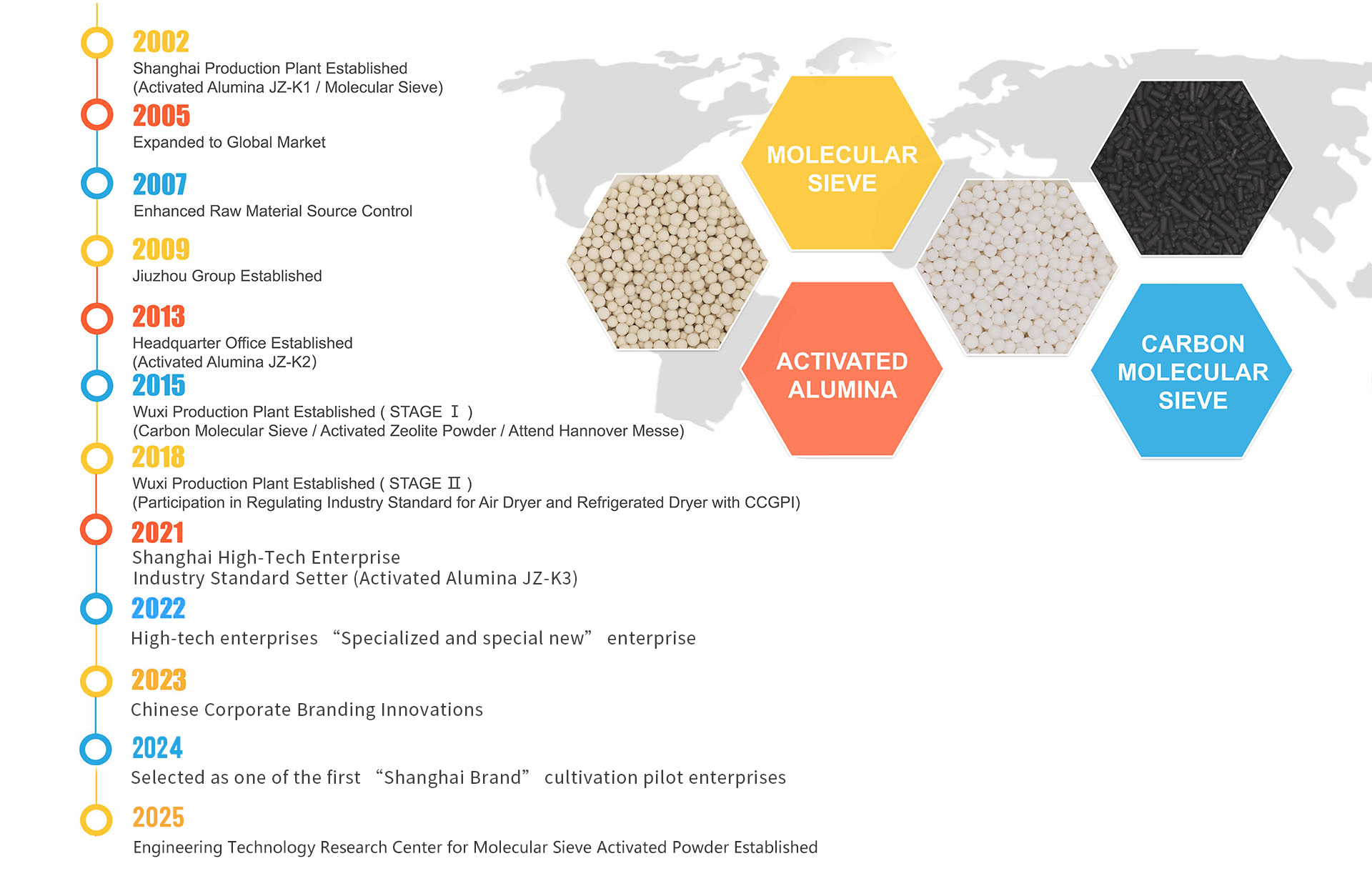
Shanghai Jiuzhou Chemicals Co., Ltd. is located in China's largest economic hub, Shanghai. Over the years, Jiuzhou has consistently adhered to the principles of "quality control and continuous innovation," remaining committed to the development, manufacturing, and supply of high-grade industrial adsorbents.
Our main products include various molecular sieve powders, molecular sieves, activated powder, activated alumina, aluminum oxide catalysts, different types of alumina packing and ceramic balls, sodium silicates, aluminum hydroxide, zeolite 4A, sodium carbonates, and SLES. All products have passed the ISO9001:2008 quality management system certification, as well as TUV and SGS Certifications.
Our technical strength and industrial reputation lead the field of desiccants. Backed by senior experts, automated multi-functional production workshops, and dynamic laboratories with large-scale monitoring and analysis instruments, we offer tailored solutions to clients worldwide.
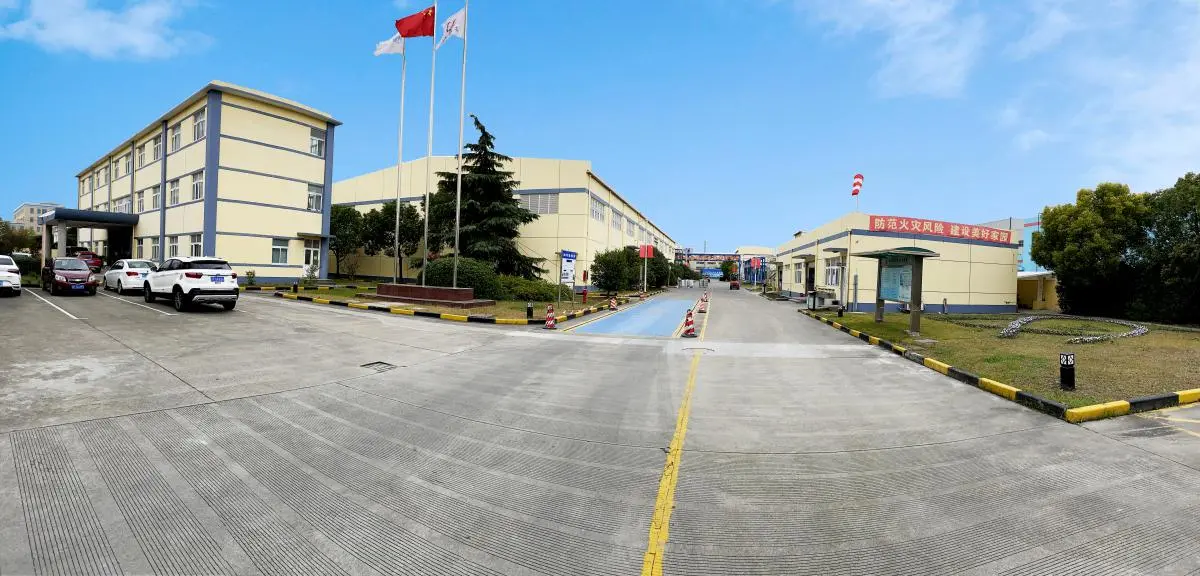
Shanghai Manufacturing Hub
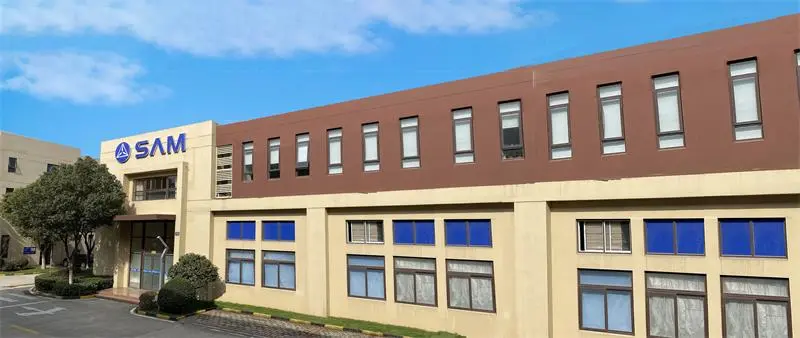
Wuxi Production Hub
Ensuring uninterrupted supply, consistent quality, and price stability in a volatile global market.
Jiuzhou Chemicals maintains direct partnerships with domestic aluminum refineries and raw mineral processors. This close integration allows us to lock in material pricing, shielding global OEM clients from raw material price volatility.
Equipped with state-of-the-art rotary kilns and bead-forming technology, our production is highly automated. Real-time monitoring ensures that properties like pore size distribution, mechanical strength, and bulk density remain uniform across every batch.
Our factories in Shanghai and Wuxi enjoy prime locations near the Port of Shanghai. This enables us to arrange international shipping within days, offering flexible freight options (FOB, CIF, DDP) and swift ocean transit times.
We don’t just follow industrial specifications—we help write them. Jiuzhou Chemicals is an active participant in defining industry benchmarks.
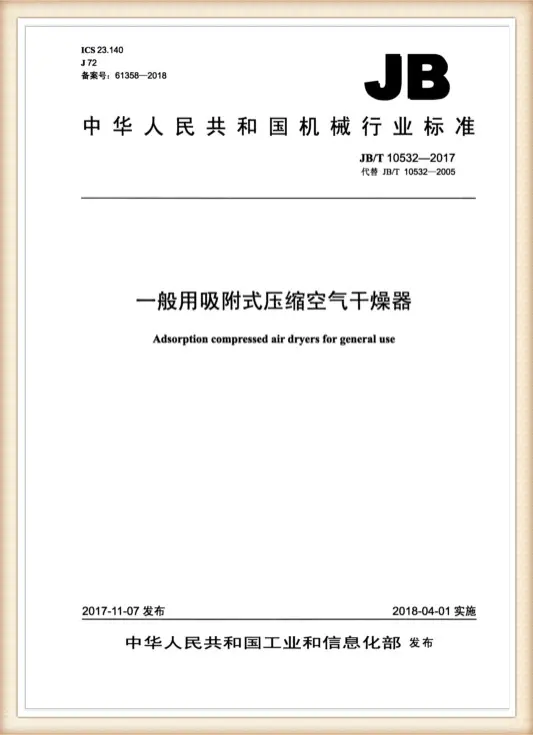
Adsorption compressed air dryers for general use
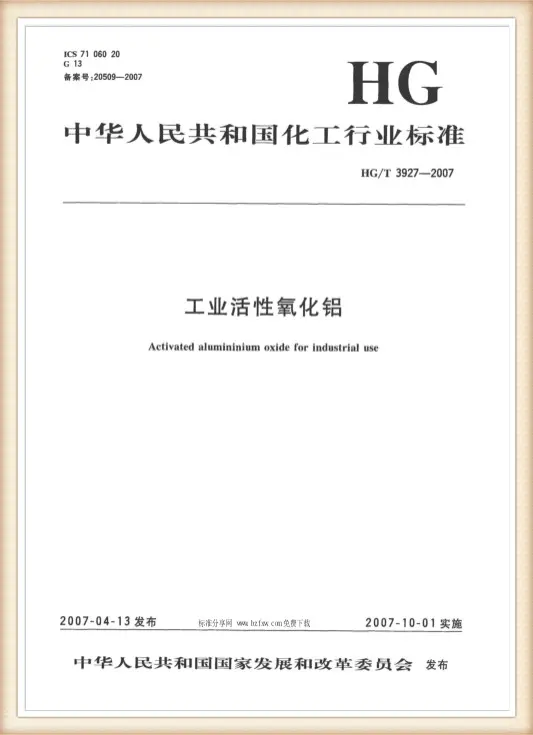
Activated aluminium oxide for industrial use
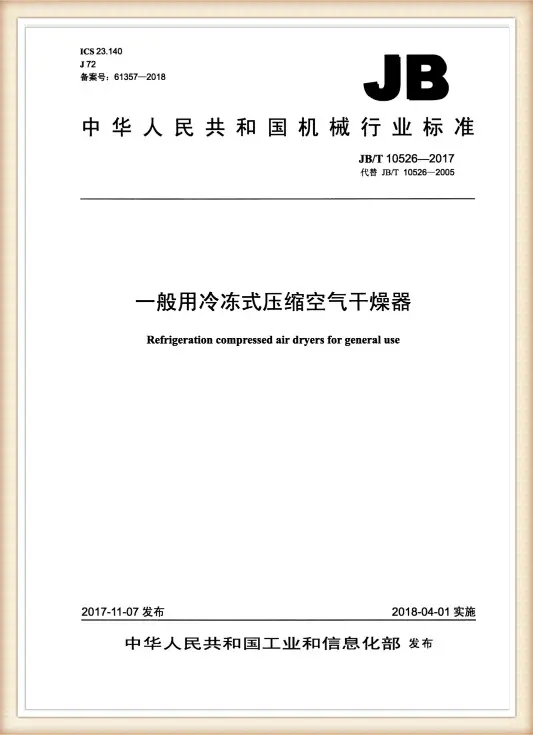
Refrigeration compressed air dryers for general use
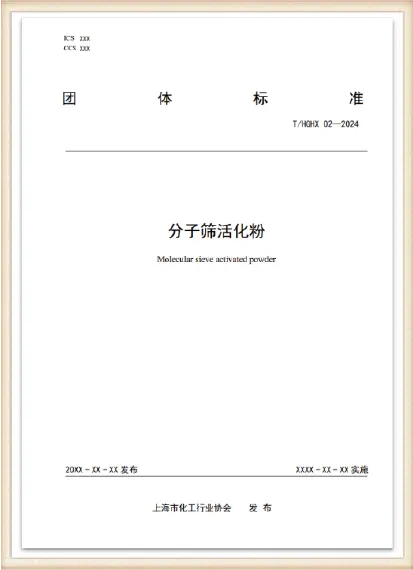
Industrial Dryer Group Technical Code
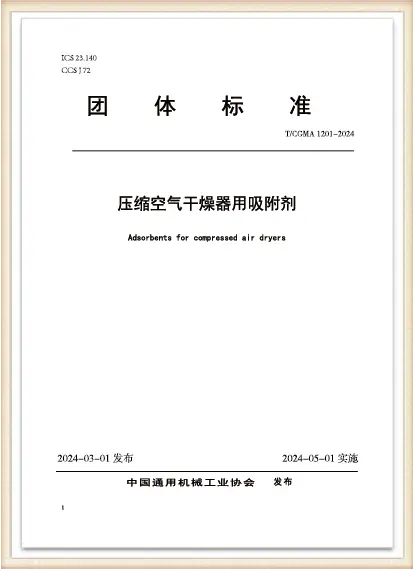
Chemical Adsorbent Quality & Evaluation Rules
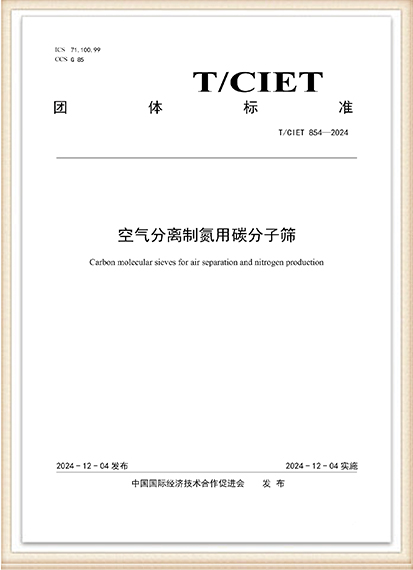
Green Low-Carbon Chemical Product Guidelines
Our mission: "Better air, Better life." Our manufacturing processes prioritize eco-friendly, carbon-efficient technologies.
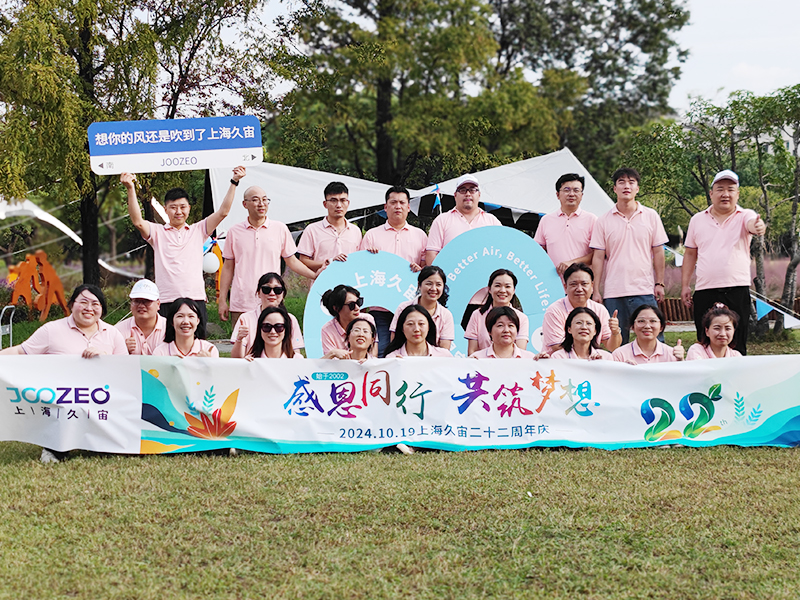
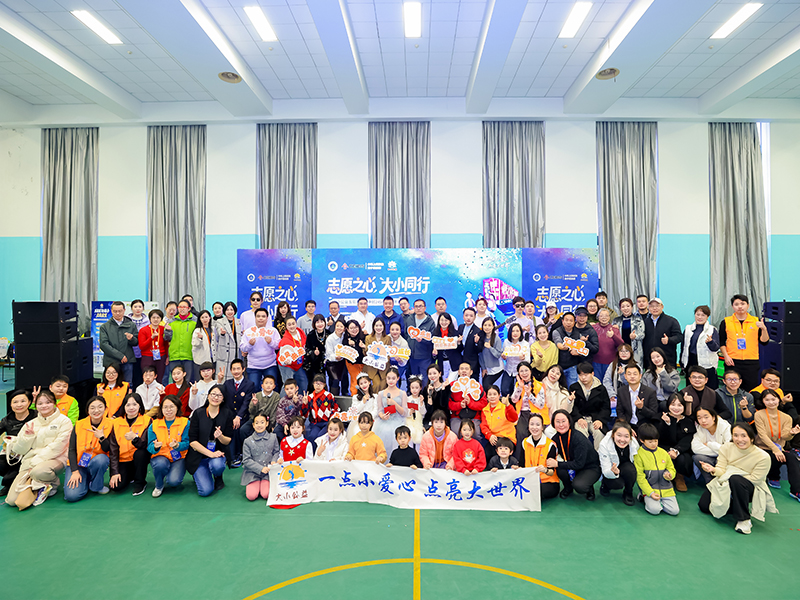
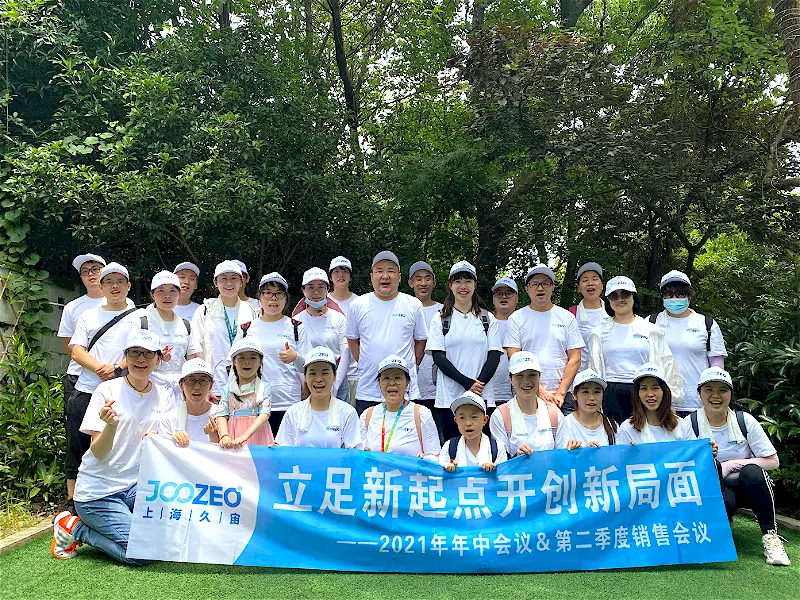
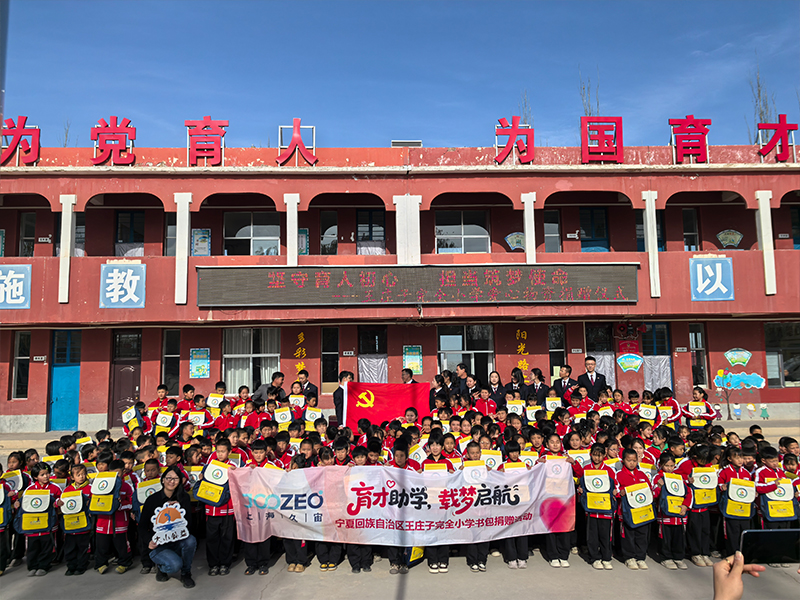
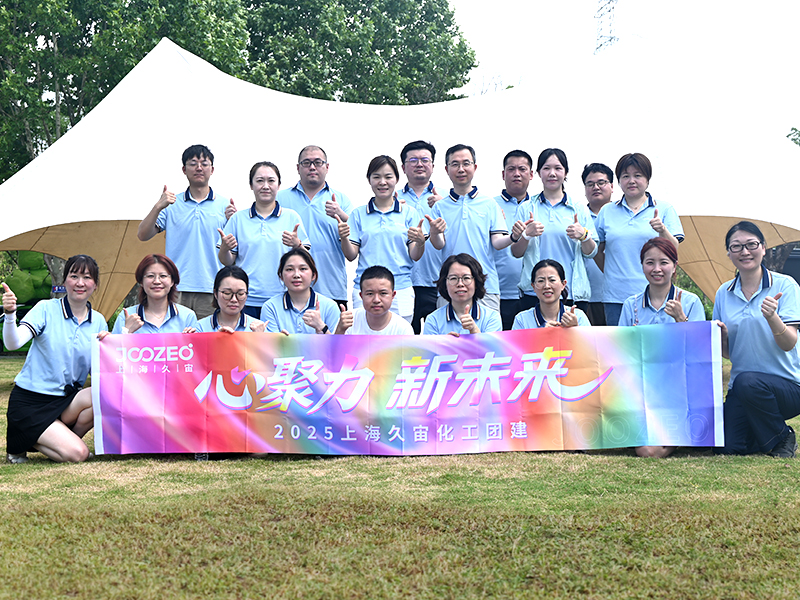
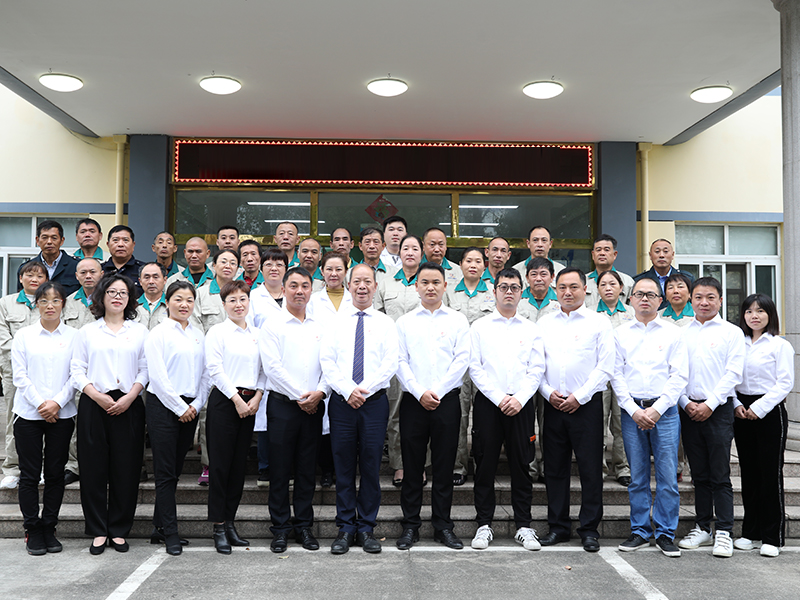
Leading adsorption science into the next decade with advanced research.
Traditional desiccant regeneration is energy-intensive. Our future roadmap focuses on surface modifications of activated alumina to lower the desorptive activation energy, reducing regeneration temperatures from $180^\circ\text{C}$ to under $120^\circ\text{C}$.
By blending the mechanical durability of alumina with the high static capacity of silica gel, our hybrid desiccant JZ-WSAG delivers high moisture retention along with shatter-proof resilience when exposed to liquid water.
In alignment with T/CIET 854-2024, we are adopting water-recycling closed loops during product precipitation. This drastically reduces wastewater discharge and lowers our production carbon footprint.
Common questions from procurement managers and chemical plant operators.
Contact us today. Our engineering experts will respond within 24 hours with custom formulation, pricing, and packaging details.
Send Enquiry Request